Commercial Parking Lot Striping and ADA Compliance
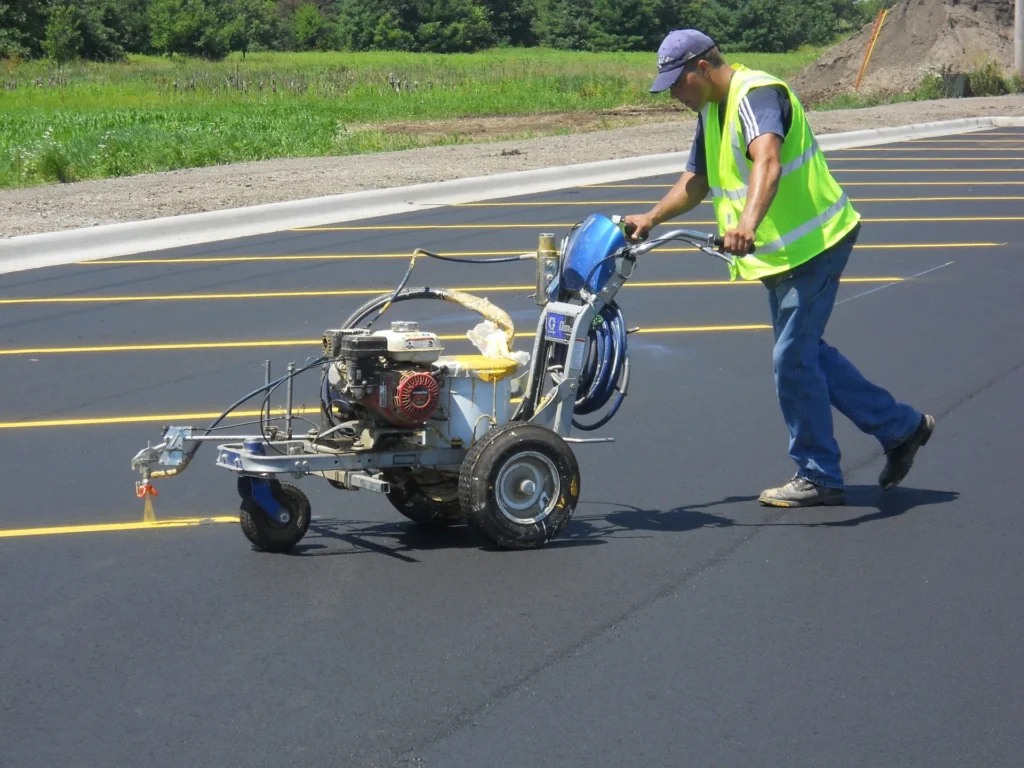
Parking lot striping is one of those services that gets taken for granted until something goes wrong. Faded lines make a property look neglected. A missing accessible stall triggers a complaint. An unclear traffic pattern causes a fender bender in front of the main entrance. For commercial property owners across Northwest Arkansas and the River Valley, striping is quietly one of the highest impact investments you can make in your parking lot.
This guide walks through what modern commercial striping looks like, how ADA compliance actually works in a real parking lot, and how to get a striping job that lasts instead of one that fades in a season.
Why Striping Matters More Than People Think
The lines on your parking lot are the primary way you communicate with drivers, pedestrians, and delivery vehicles. They tell people where to park, where to walk, where to stop, and where not to go. When those lines are crisp and correctly laid out, the lot practically runs itself. When they are faded or missing, every visit becomes a small negotiation.
There is also a liability dimension that a lot of owners underestimate. Faded fire lanes, missing stop bars, unclear pedestrian crossings, and out of compliance accessible stalls can all become exhibits in a slip and fall or vehicle collision case. Insurance carriers increasingly ask for photos of parking areas during renewals, and a lot that looks maintained is a lot that gets better rates.
Finally, there is the first impression. For retail, medical, restaurant, and office properties, the parking lot is the first thing every customer sees and the last thing they touch on the way out. A freshly striped lot with bright, clean lines signals that the business inside cares about details. A washed out lot with ghost lines from three different layouts signals the opposite.
The Anatomy of a Modern Commercial Layout
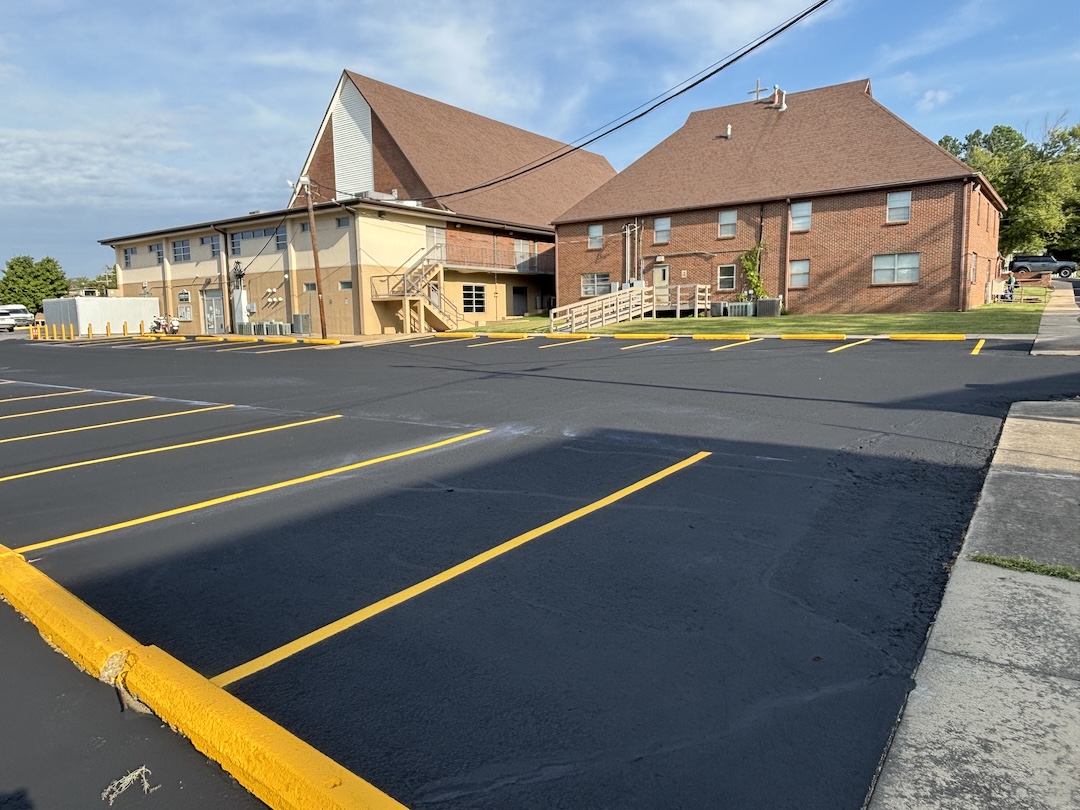
A well designed parking lot has a lot more going on than parking stalls. A complete layout typically includes standard stalls sized for the property type, accessible stalls with adjacent access aisles, directional arrows and traffic flow markings, stop bars at exits and internal intersections, pedestrian crosswalks near main entrances, fire lanes marked in red with clear text, loading zones for deliveries, and no parking zones near dumpsters and utility access points.
Stall dimensions vary by use. A standard retail stall in Arkansas is typically nine feet wide by eighteen feet deep. Medical and grocery properties often go to nine and a half or ten feet wide to accommodate car doors opening next to shopping carts and wheelchairs. Compact stalls, employee stalls, and reserved stalls all have their own conventions, and the right mix depends on how the property actually gets used through the day.
Traffic flow is where good design separates itself from average design. A lot that funnels cars naturally toward the entrance and pushes them out toward the exit through clear directional arrows and one way aisles moves twice as many vehicles as a lot that leaves everyone guessing. When we restripe an existing lot, we always look for opportunities to improve flow rather than simply repainting what was there before.
ADA Compliance in Plain English
The Americans with Disabilities Act sets minimum requirements for accessible parking, and those requirements are not optional. They apply to nearly every commercial property with public parking, and they are enforced through both federal complaint processes and state building code.
The core rules come down to counts, dimensions, and signage. The total number of accessible stalls required scales with the total number of stalls in the lot. A lot with 1 to 25 stalls needs at least one accessible stall. A lot with 26 to 50 needs two. The scale continues from there, with larger lots requiring proportionally more accessible spaces.
At least one out of every six accessible stalls must be van accessible, which means it has a wider access aisle to accommodate a side loading wheelchair ramp. Standard accessible stalls need an access aisle at least five feet wide. Van accessible stalls need an access aisle at least eight feet wide, or a stall that is at least eleven feet wide with a five foot aisle.
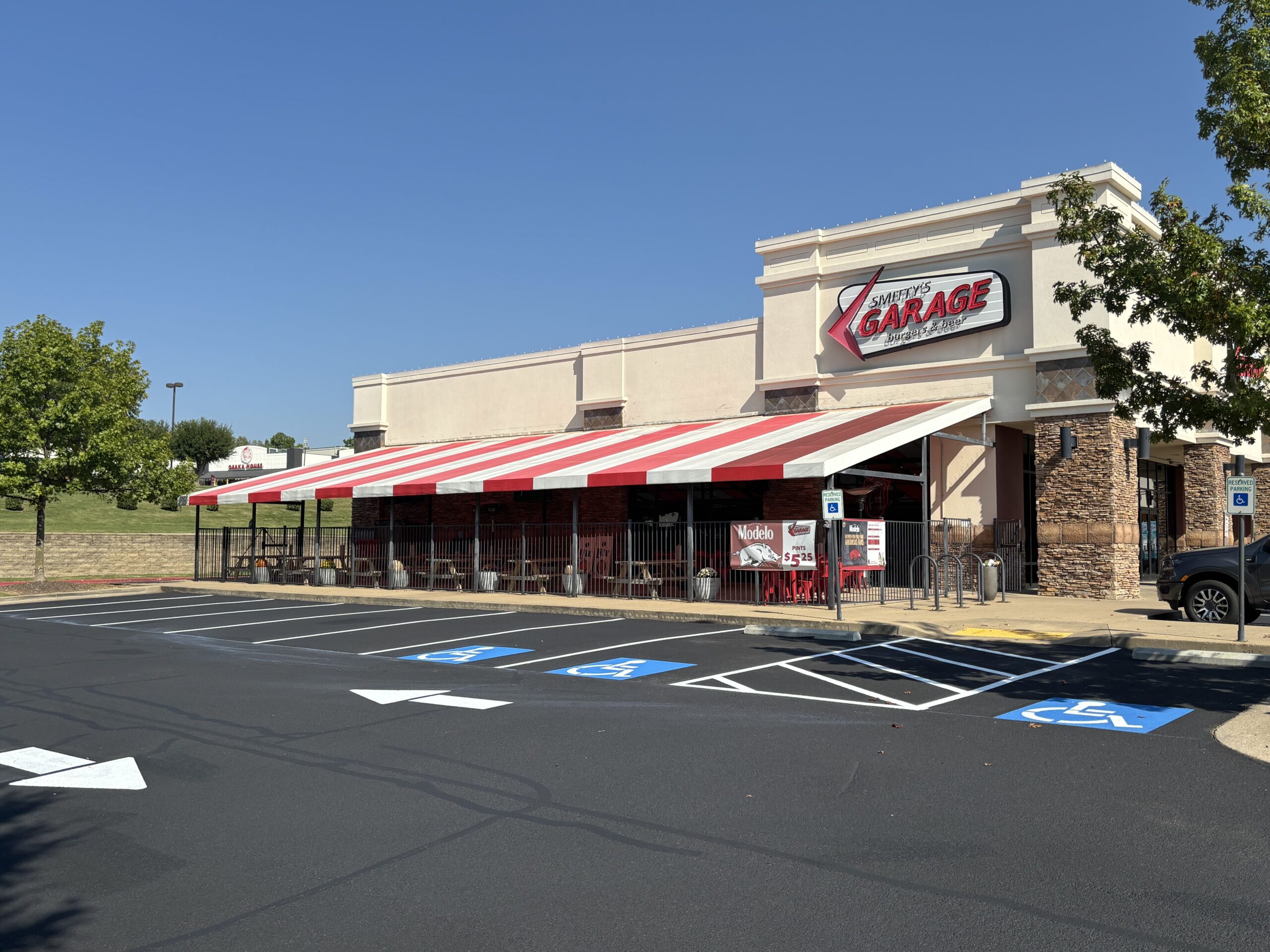
Every accessible stall needs a vertical sign mounted at least sixty inches above the ground, and the international symbol of accessibility must be painted on the pavement itself. Access aisles must be striped with diagonal lines and marked with the words no parking to prevent them from being used as regular stalls.
Slope matters too. Accessible stalls and access aisles cannot exceed a two percent slope in any direction. On an existing lot this is one of the most common compliance issues we find, and it often requires a section of pavement to be removed and replaced rather than simply restriped.
Paint Selection and Longevity
Not all striping paint is created equal, and this is where a lot of budget striping jobs fall apart within twelve months. The three main options for commercial parking lots are water based traffic paint, solvent based traffic paint, and thermoplastic.
Water based traffic paint is the most common choice for standard parking lot striping. It dries quickly, has low odor, and performs well on properly prepared asphalt surfaces. On a freshly sealcoated lot, quality water based paint applied at the correct mil thickness will hold up for two to three years in Arkansas conditions.
Solvent based paint offers slightly better adhesion on older, oxidized pavement and can be a better choice for lots that are not being sealcoated at the same time. It has a stronger odor during application and takes longer to cure, but the durability advantage on rough surfaces can be worth it.
Thermoplastic is a heated compound that is applied hot and bonds mechanically to the pavement as it cools. It is dramatically more durable than paint, often lasting five to seven years even in heavy traffic areas, and it is our recommendation for fire lanes, stop bars, and other high value markings that need to stay visible. The upfront cost is higher, but the lifecycle cost is usually lower.
When to Restripe
A rough rule of thumb is that a commercial lot needs to be restriped every two to three years, with high traffic areas like drive through lanes and main entrances sometimes needing attention annually. The clearest signal is visibility. If a driver approaching the lot cannot clearly see the stall lines from twenty feet away in normal daylight, it is time.
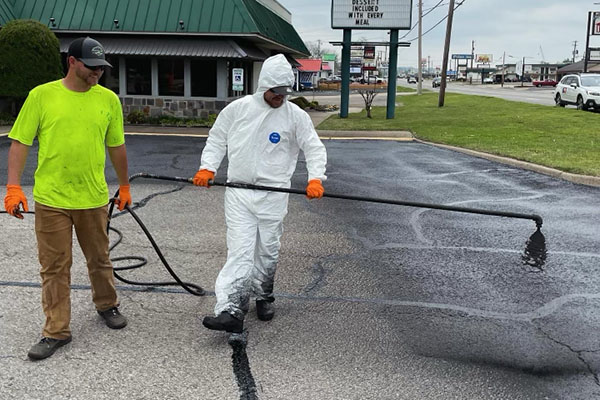
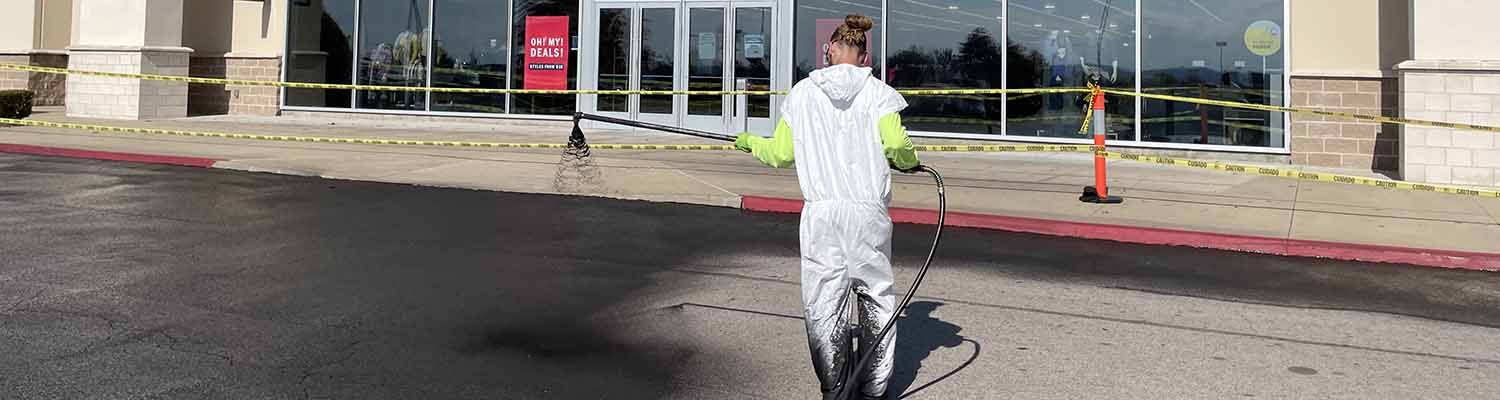
Restriping is also the natural companion to sealcoating. When we sealcoat a lot, all existing striping is covered by the new coating, so fresh striping is included in the same visit. This is by far the most cost effective way to refresh a lot because the crew, equipment, and site setup are already in place.
Get a Striping Assessment
If your commercial property has faded striping, unclear traffic flow, or ADA compliance questions, our team can walk the lot with you and put together a plan that addresses all three. We handle commercial striping projects across Northwest Arkansas, the River Valley, and Central Arkansas, from small retail lots to large corporate campuses.
Call our Northwest Arkansas office at (479) 547-1111, our Fort Smith office at (479) 431-5304, or our Conway office at (501) 476-1522. You can also request a free estimate online and we will follow up within one business day.