ADA Striping Compliance for Arkansas Property Managers
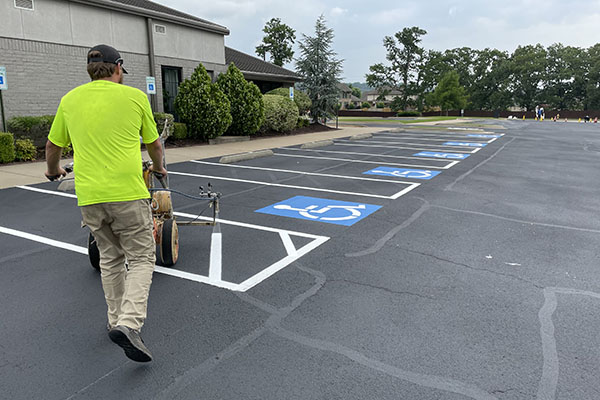
ADA striping compliance is one of the most overlooked liability exposures in commercial property management. Faded lines, missing access aisles, and undersized accessible stalls are all violations, and they all show up on plaintiff attorney drive-by audits. Here is what Arkansas property managers actually need to know.
How Many Accessible Spaces Does My Lot Need
The minimum count is set by total parking spaces in the lot. As a working rule:
- 1 to 25 spaces: 1 accessible
- 26 to 50: 2 accessible
- 51 to 75: 3 accessible
- 76 to 100: 4 accessible
- 101 to 150: 5 accessible
- 151 to 200: 6 accessible
At least one of every six accessible spaces (or fraction thereof) must be van-accessible.
What Each Accessible Stall Requires
Every accessible stall needs:
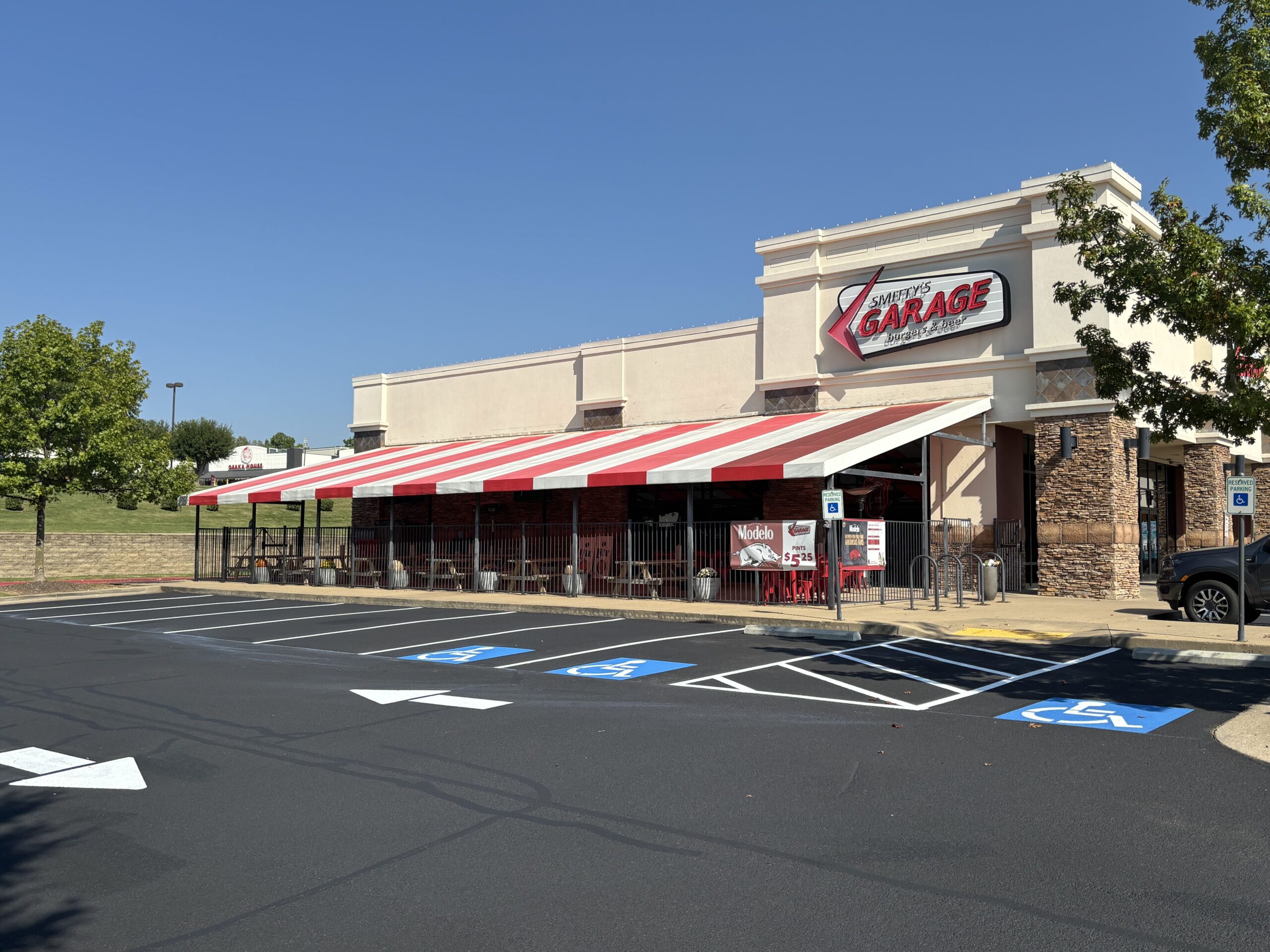
- Stall width of at least 8 feet (96 inches), with an adjacent access aisle.
- Access aisle of at least 5 feet wide for car-accessible, 8 feet for van-accessible (or, in shared layouts, a 5 foot aisle if the stall is widened to 11 feet).
- Signage mounted at least 60 inches above the ground, displaying the International Symbol of Accessibility. Van-accessible stalls need an additional "Van Accessible" sign.
- Surface slopes no greater than 2 percent in any direction.
- An accessible route from the stall to the building entrance, free of curbs, steps, or steep slopes.
The Most Common Violations We See
- Faded paint. A symbol that has worn off is treated like no symbol at all.
- Missing access aisles. The hatched, no-parking zone is not optional.
- Wrong slope. A stall on a 4 percent slope is non-compliant even if everything else is perfect.
- Missing van-accessible signage on the lot's only accessible space.
Why It Matters
Drive-by ADA lawsuits are common in Arkansas commercial property. The fix on the front end (a few hundred dollars of striping and signage) is a fraction of the legal cost on the back end.
For a free ADA striping audit of your lot, see our parking lot striping service or request an estimate.