How Long Does Sealcoating Last in Northwest Arkansas?
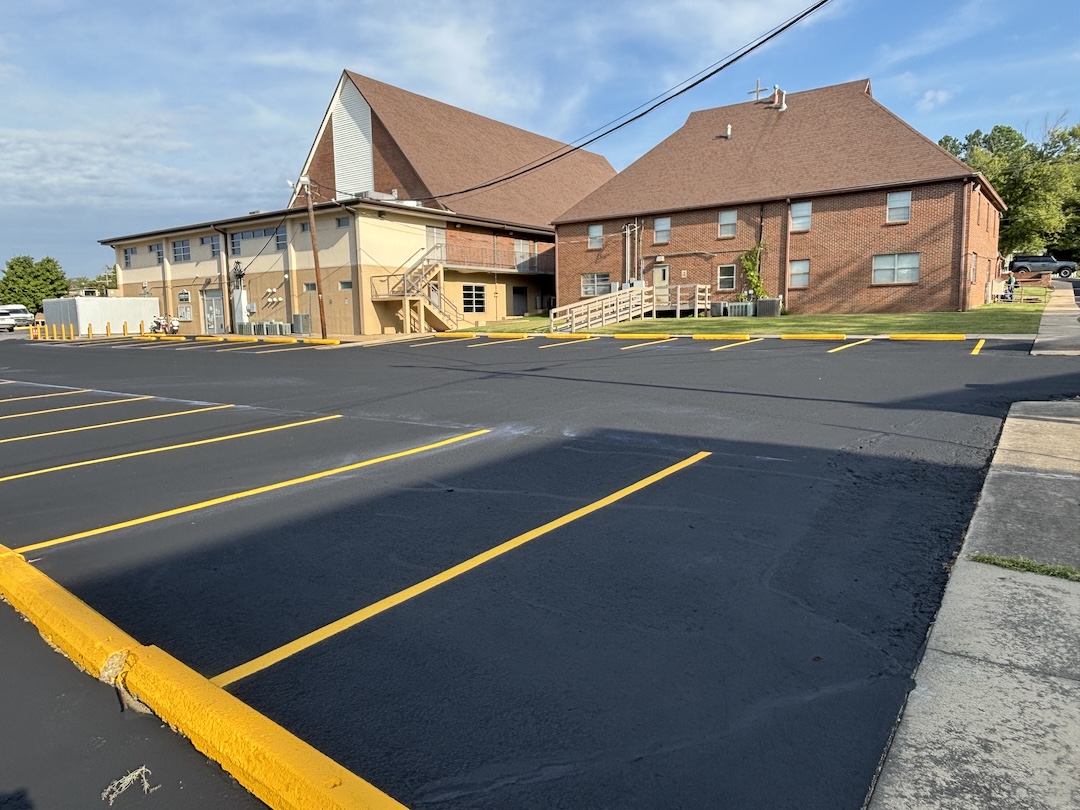
Short answer: a properly applied two-coat sealcoat job on a commercial parking lot in Northwest Arkansas lasts 2 to 4 years. Light-traffic lots stretch to the four-year mark. Heavy-traffic QSR pads, grocery stores, and drive-thrus often need it closer to every 18 to 24 months. Driveways and HOA roads usually fall in the 3 to 4 year range. That is the real-world answer property managers in Fayetteville, Bentonville, Springdale, and Rogers ask us about every week.
But the honest answer is more useful: lifespan depends on what is under the sealer, what is on top of it, and what the weather does to it in between. This guide walks through every variable that matters so you can plan a reseal cycle that actually protects your investment instead of repeating it every year.
What Actually Wears Sealcoating Down
Sealcoating is a sacrificial layer. Its job is to take the punishment so the asphalt underneath does not. Five forces wear it out:
- UV radiation. Sunlight breaks down the binders in asphalt and in sealer. A fresh black lot in June is already losing color by August in Northwest Arkansas sun.
- Freeze and thaw cycles. Water gets into hairline cracks, freezes overnight, expands roughly 9 percent, and pries the pavement apart. NWA gets dozens of freeze-thaw cycles every winter.
- Vehicle traffic. Power steering scrub at low speeds, especially in drive-thrus and turning areas, grinds sealer off faster than straight-line driving.
- Petroleum exposure. Gasoline, diesel, motor oil, and hydraulic fluid dissolve asphalt binder. Sealcoating slows this down, but a steady drip from one parked work truck can chew through it in months.
- Water and drainage. Standing water is the single biggest accelerator of sealer failure. Wherever water pools, sealer fails first.
The lots that last the full 4 years have all five working in their favor. The lots that fail at 18 months have at least two working against them.
Why Northwest Arkansas Climate Is Hard on Sealer
Local weather sits in a difficult middle zone. We get genuine winters but not consistent ones. We get hot summers but with high humidity. That combination is harder on pavement than either pure cold or pure heat.
Freeze-thaw counts. Fayetteville and Bentonville average 70 to 90 freeze-thaw cycles a year. A cycle is anything that crosses 32 degrees in both directions within 24 hours. Each cycle is a chance for water in a micro-crack to expand and lift the sealer.
Summer surface temperatures. Asphalt surface temps regularly run 140 to 160 degrees in July and August even when air temps are in the low 90s. That heat softens binders and accelerates UV breakdown.
Spring storms. April and May bring intense rain that floods low spots, and floods that sit for hours strip sealer at the edges.
Clay subgrade. Most of NWA sits on expansive clay. Clay swells with moisture and shrinks when dry, which moves the pavement above it. Movement opens cracks. Cracks invite water. Water invites failure.
You cannot change the climate, but you can plan around it. That is what a real reseal cycle does.
Lifespan by Lot Type
Same sealer, same crew, same weather. Different lifespan, because traffic and use patterns differ.
| Lot type | Realistic lifespan | Reseal cadence |
|---|---|---|
| --- | --- | --- |
| Church or low-use office | 3 to 4 years | Every 3 to 4 years |
| Medical or professional office | 2.5 to 3.5 years | Every 3 years |
| Retail strip center | 2 to 3 years | Every 2 to 3 years |
| HOA streets and shared lots | 3 to 4 years | Every 3 to 4 years |
| Grocery store | 18 months to 2.5 years | Every 2 years |
| QSR or coffee drive-thru | 12 to 24 months | Every 18 months |
| Industrial or truck lot | 12 to 18 months | Annual to every 18 months |
These ranges assume a real two-coat commercial-grade application with proper prep. Cut any of that and the cadence shortens.
Signs It Is Time to Reseal
You do not need a contractor to tell you when sealer is failing. You need a five-minute walk around the lot.
- Color shift from black to gray. Loss of color means loss of UV protection. The asphalt underneath is now taking the hit.
- Visible aggregate. When you can see the small stones in the asphalt mix from a standing height, the sealer is gone.
- Raveling at the edges. Small stones loose underfoot, especially along edges and where tires turn, is early-stage pavement failure.
- Hairline cracks spreading. New cracks or old cracks getting wider mean water is winning.
- Sand or fines collecting in low spots. That sand used to be embedded in the sealer.
- Oil spots bleeding through. Sealer that used to mask old oil staining is no longer thick enough to do so.
If two or more of these are showing across the lot, you are past due. If three or more are showing, you may need crack sealing and patching before sealcoating to get a quality result.
How to Stretch Sealcoating Life
The same lot can last 18 months or 4 years depending on what you do around the sealcoat job itself. The high-leverage moves:
Seal cracks every year, not every reseal cycle. Cracks are the front door for water. A $400 crack seal visit each spring buys years of pavement life. See our crack filling service for what that looks like.
Fix drainage first. A low spot that holds water for hours after a storm will eat through any sealer. Saw-cut and re-grade, install a trench drain, or extend a downspout away from the pavement before you spend money on sealer.
Always specify two coats. A single coat looks good for a season and fails fast. Two coats is the commercial standard for a reason.
Demand proper cure time. Sealer needs 24 hours minimum before light traffic and 48 to 72 hours before heavy vehicles. Driving on a half-cured lot scrubs the new sealer off immediately.
Restripe right after. Fresh stripes on fresh sealer is one job, not two. It also signals to drivers that the lot is cared for, which subtly reduces abuse.
What Shortens Sealcoating Life
The mirror image. Avoid these and you stop cutting your own lifespan in half.
- Sealing too soon after paving. New asphalt needs 30 to 90 days to cure before its first sealcoat. Seal too early and the sealer will not bond.
- Sealing in the wrong weather window. Sealer needs surface temps above 50 degrees, no rain in the forecast for 24 hours, and ideally low humidity. Application outside that window leads to soft sealer that scuffs and tracks.
- Watered-down sealer. Some contractors over-dilute to stretch material. The lot looks fine for a week and starts shedding sand within months.
- No oil-spot primer. Old oil spots will bleed through new sealer unless a primer is used first.
- Skipping crack sealing. Sealcoating over open cracks does not fix the cracks. Water still gets in, and the seal fails first along those crack lines.
- Single thin coat. The most common corner to cut on a cheap bid. Always ask how many coats and what the application rate is per square yard.
NWA Timing Windows: When to Schedule
Local climate gives us a sealcoating season that runs roughly from mid-April through late October. Inside that window, some weeks are better than others.
- Late April to mid-May. Good. Pollen can be an issue, but temps and dry windows are reliable.
- June through August. Best. Long cure windows, high surface temps for fast cure, lowest rain risk.
- September and early October. Good. Cooler nights extend cure time but quality is excellent.
- Late October. Possible but risky. Cool overnight temps and early frost can lead to a soft cure.
- November through March. Avoid. Sealer cannot achieve a full cure below 50 degrees.
Most commercial owners get the best results scheduling between Memorial Day and Labor Day, then booking next year's work before they leave the site.
Putting It Together: A Real Reseal Plan
For a typical retail strip center in Bentonville or Springdale, the plan looks like this:
- Year 0: Two-coat sealcoat, crack seal, restripe.
- Year 1: Crack seal in spring. Visual inspection in fall.
- Year 2: Crack seal in spring. Begin getting reseal bids.
- Year 3: Two-coat sealcoat, crack seal, restripe. Reset the cycle.
A QSR drive-thru in Rogers runs a tighter loop:
- Year 0: Two-coat sealcoat, crack seal, restripe, fix any oil-spot prep.
- Year 1: Spring crack seal. Mid-year inspection. Reseal bids in fall.
- Year 2: Two-coat sealcoat, crack seal, restripe. Reset.
The point is not the exact schedule. The point is having one. Lots without a plan get resealed when they look bad, which is always 6 to 12 months past the point where the cheapest fix would have worked.
Driveways and HOA Roads in Northwest Arkansas
The numbers shift a little for residential driveways and HOA-managed roadways. A residential driveway in Fayetteville or Bentonville is low-stress pavement: a couple of vehicles a day, no turning trucks, no fuel deliveries. With a proper two-coat application, expect 3 to 4 years between reseals, sometimes longer. HOA shared lots and private streets see more traffic but still less than commercial retail, and they typically reseal on a 3-year cycle to keep the community looking maintained.
The biggest mistake on residential and HOA pavement is the opposite of the commercial mistake. Commercial owners under-invest in prep. Residential owners over-reseal, putting fresh sealer down every year because the previous coat looks faded. Sealer applied over sealer that has not yet failed does not bond well and can actually shorten the life of the coating below it. Three to four years is the right cadence for most homes and quiet communities in NWA, not annual.
How a Pavement Audit Changes the Plan
Two lots the same size and age can need very different reseal schedules. The only way to know is a walk-the-lot inspection with someone who actually reads pavement. A real audit looks at:
- Surface condition: color, raveling, aggregate exposure
- Crack pattern: linear vs alligator, width, depth
- Drainage: where water pools, how long it sits
- Edge condition: curb interface, transition cracks
- Patch history: where past repairs are holding, where they are not
- Base soundness: any soft or spongy areas
That five to ten minute walk turns "we sealed it three years ago, is it due?" into a numbered list of work in priority order. Almost always there is a cheaper move available than a full reseal. Sometimes it is the opposite, and a reseal alone will not save a lot that needs base work first.
Ready to Plan Your Next Reseal?
If your last sealcoat is over two years old, or you are seeing any of the failure signs above, the cheapest move is a written assessment now rather than an emergency reseal later. See our parking lot sealcoating service for what a real commercial sealcoat job looks like, read our 2026 sealcoating cost guide for budget planning, or request a free estimate and we will walk the lot with you.